
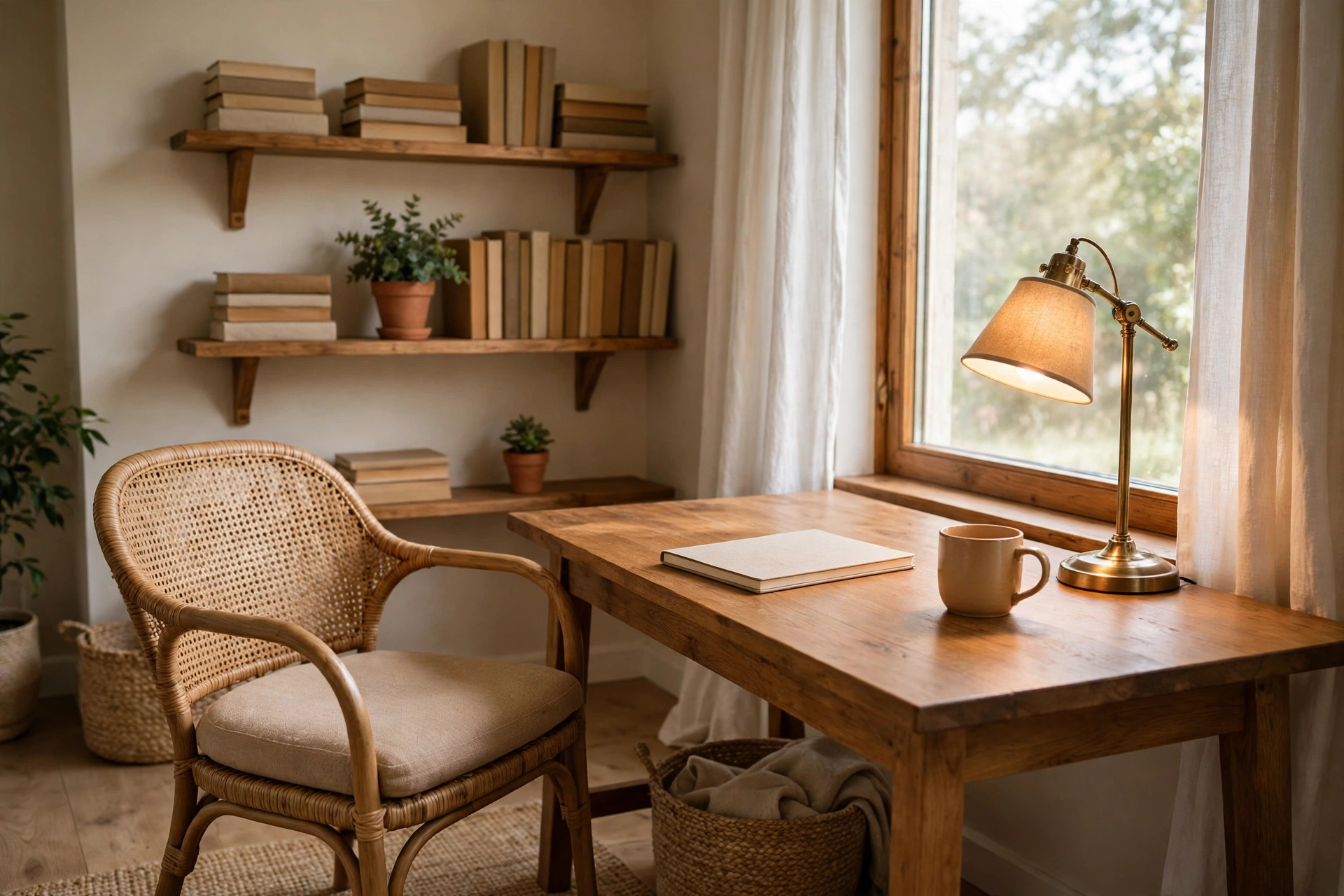
There was a time when my “office” was wherever I could find a flat surface. Some days it was the dining table, other days it was the end of the sofa with a laptop balanced on my knees. It worked, but only just. By the evening, my back hurt, my papers were everywhere, and I could never quite switch off.
That changed when I finally gave work a proper corner of its own. It was not a spare room, and it was not expensive. It was one quiet corner, set up with care, and it made working from home feel calmer, easier, and, dare I say, enjoyable. Here are five home office and study corner ideas that can do the same for you.
1. Choose a Corner That Feels Separate, Even in a Small Room
The first step is not furniture, it is location. Pick a corner you can claim as yours, even if it is just a metre of wall space. A spot near a window is ideal, but a quiet corner away from the television and the kitchen traffic works just as well. The key is consistency. When you sit in that same spot each day, your brain learns that this is where work happens, and stepping away feels like a real break.
If space is very tight, try a floating desk or a slim console table. You do not need a large surface, just enough room for your laptop, a notebook, and a cup of tea. A small rug under the chair can also help mark the zone, turning an ordinary corner into a place that feels intentional.
2. Pick a Desk That Fits the Space, Not the Other Way Around
It is tempting to buy a big, impressive desk, but in a small home, proportion matters more than size. Measure your corner first, then look for a desk that leaves room to push your chair back and move comfortably. A desk that is too deep will eat into your walking space, while one that is too shallow will leave you feeling cramped.
Look for clean lines and a light finish, such as pale wood or white, which help a small corner feel open rather than heavy. If you work with a laptop only, a narrow writing desk is often perfect. If you need a monitor, choose a desk with a little extra depth so the screen can sit at a comfortable distance from your eyes.
3. Use Daylight First, Then Layer in Warm Light
Good light changes everything. If you can, place your desk sideways to a window so daylight falls across your workspace without glaring on your screen. Natural light keeps you alert during the day and makes even a small corner feel brighter and more inviting.
For evenings, add a warm desk lamp with adjustable brightness. Avoid harsh overhead lighting on its own, which can feel cold and tiring. A small lamp, plus a soft glow from a nearby shelf or floor lamp, creates a calm pool of light that helps you focus without straining your eyes.
4. Keep Storage Simple and Close at Hand
Clutter is the enemy of a good work corner. The trick is not to have more storage, but to have the right storage within arm’s reach. A single drawer, a small shelf above the desk, or a pretty basket for chargers and notebooks is usually enough. The goal is a clear desk surface, with everything else tucked neatly away but easy to grab.
Try a cable tidy or a small box to hide chargers, and keep only the items you use daily on the desk itself. A pen pot, a notebook, and a water glass are plenty. When your workspace is tidy, your mind feels tidier too, and you can start work without spending ten minutes clearing a space.
5. Make It Personal, But Keep It Calm
A work corner should feel like yours, not like a showroom. Add one or two things that make you smile, a favourite mug, a small plant, a framed photo, or a print you love. These small touches make the space welcoming, so you actually want to sit down there each morning.
Just keep it restrained. Too many decorations can become distractions, especially on video calls. Choose a calm colour palette, soft neutrals with one warm accent, and let your personal items be the quiet stars of the corner. Comfort matters too, so invest in a chair that supports your back, even if it is a simple chair with a cushion for lumbar support.
Mistake to avoid
The most common mistake is buying furniture before planning the space. A beautiful desk that does not fit, a chair that is too wide, or a lamp that throws shadows across your keyboard will all make work harder, not easier. Measure first, think about light and storage, and only then choose your pieces. A little planning at the start saves a lot of frustration later.
Working from home does not need a perfect room or a big budget. It needs a corner that feels separate, a desk that fits, good light, simple storage, and a few personal touches that make it yours. Set it up once, with care, and you will find that work feels lighter, calmer, and a little more enjoyable every day.
Start small, choose one corner this weekend, and see how much difference a dedicated space can make.
Leave a Reply