
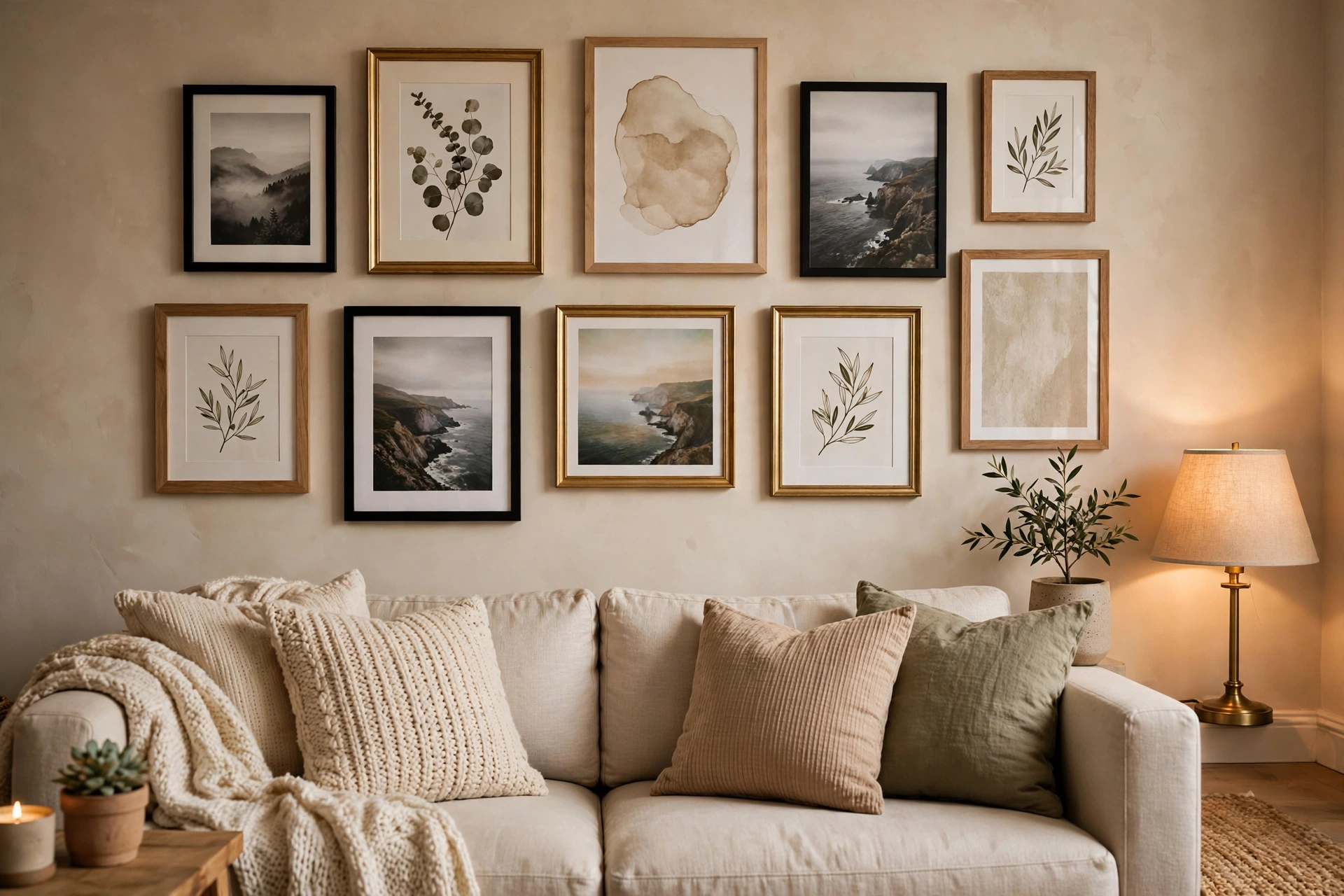
I used to walk past the big blank wall in my living room every single day and barely notice it. It was painted, it was clean, and it was completely forgettable. Then one weekend I finally hung three framed prints above the sofa, and the whole room changed. Suddenly the space felt finished, personal, and warm, like it actually belonged to someone. That is the quiet power of wall art. It does not need a renovation or a big budget. It just needs a little thought about what goes where, and why.
Here are five ideas that will help you turn an empty wall into something you love looking at.
1. Start With One Anchor Piece
Every good gallery wall starts with one piece you truly love. It could be a large landscape print, a framed photograph from a trip, or a piece of art that simply makes you smile. Hang that piece first, at eye level, and build everything else around it. The anchor gives the whole arrangement a centre, so the wall feels intentional rather than random. If you are unsure where to begin, choose the piece you would keep if you could only keep one.
2. Mix Frames, But Keep One Thing in Common
A gallery wall looks best when it feels collected over time, not bought in one box. Mix wooden frames with black or gold ones, and combine photographs, prints, and small sketches. The trick is to keep one element consistent, such as the same mat colour, a similar frame thickness, or a shared colour running through the artwork. That single thread ties different pieces together and stops the wall from looking messy.
3. Lay the Arrangement on the Floor First
Before you hammer a single nail, lay all your frames on the floor and play with the layout. Try a neat grid for a calm, modern feel, or a relaxed salon style with different sizes grouped closely together for a cosier look. Leave roughly five to eight centimetres between frames so each piece has room to breathe. Take a photo of your favourite layout, then copy it onto the wall. This one step saves you from a wall full of extra holes.
4. Use Shelves for Art You Like to Change
Picture ledge shelves are perfect if you love swapping things around with the seasons. Lean framed prints, small canvases, and even a tiny vase on the shelf, and overlap pieces slightly for a relaxed, layered feel. When you fancy a change, you simply lift one piece off and put another in its place, with no new holes and no fuss. Shelves also work beautifully in narrow hallways and above a desk, where a full gallery wall might feel too busy.
5. Let Empty Space Do Some of the Work
It is tempting to fill every inch of a wall, but a little breathing room makes the art stand out more. Leave a gap above a sideboard, keep one section of the wall bare, or let a single large piece stand alone on a smaller wall. Negative space gives your eyes somewhere to rest, and it makes the pieces you chose feel more special. A wall that is thoughtfully half-full often looks far more stylish than one that is crowded.
Mistake to Avoid
The most common mistake is hanging art too high. As a rule, the centre of a piece, or of a gallery grouping, should sit at around eye level, roughly 145 centimetres from the floor. Art hung too high floats away from the furniture below it and makes the room feel disconnected. Stand back after hanging each piece and check how it relates to the sofa, console, or bed beneath it. If there is a large gap between the furniture and the art, lower it a little. That small adjustment makes the whole room feel grounded.
A blank wall is not a problem to hide. It is an invitation to tell your story, one frame at a time. Start with a piece you love, build slowly, and do not be afraid to move things around until it feels right. Your walls should reflect the life lived in front of them, and that is something no shop-bought set can do for you.
Leave a Reply