
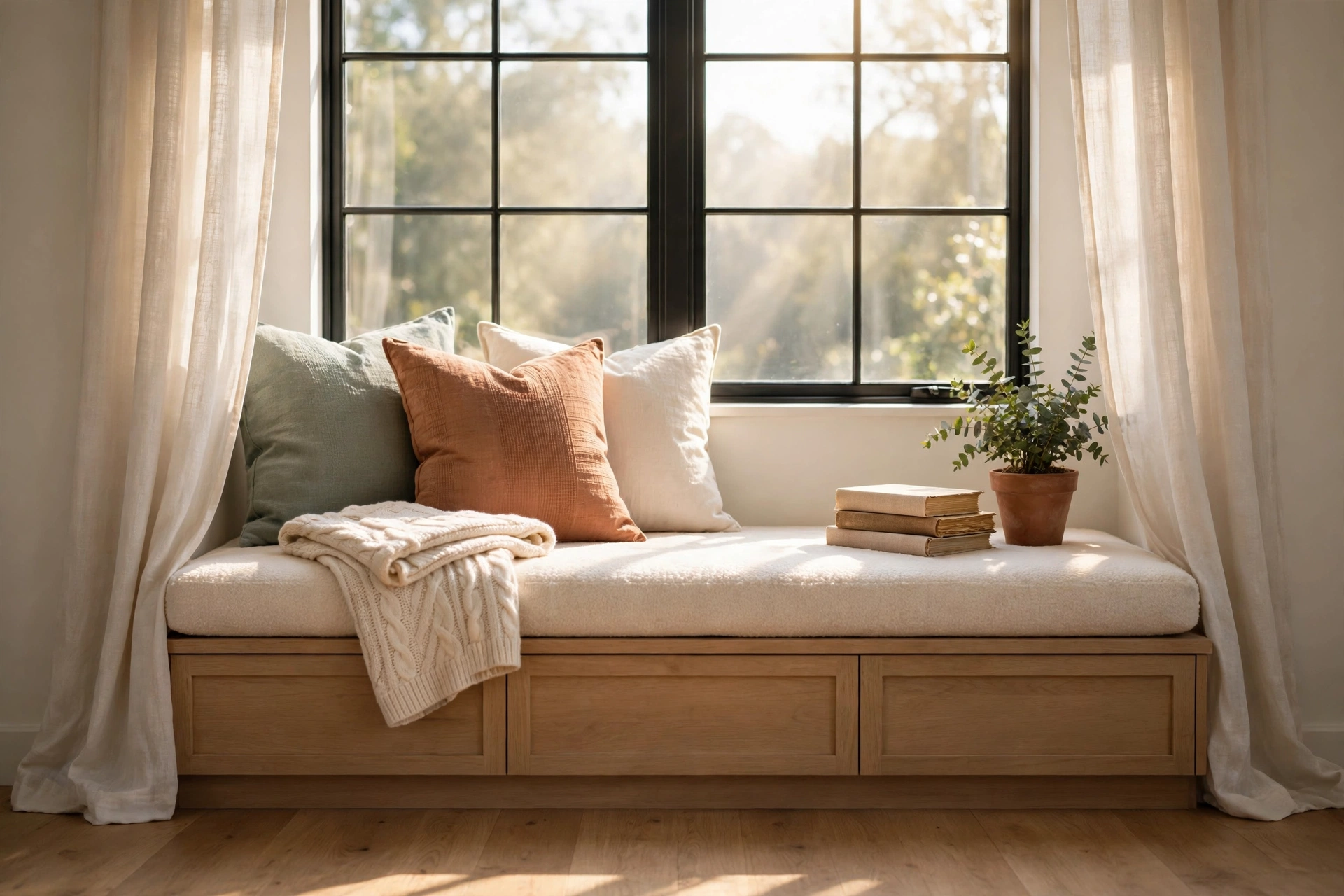
A window seat has always felt like a small gift inside a home to me — a place where the light comes in first in the morning and the outside world feels close without ever being loud. For a long time, though, the window seat in my own home was just a ledge with a cushion that kept sliding off. It looked fine in passing, but nobody ever sat there for long. When I finally styled it properly, everything changed. It became the chair everyone quietly fought over: the morning-tea spot, the reading spot, the place to watch the rain. A window seat does not need a big budget or a renovation. It needs comfort first, a little storage, and a few thoughtful touches that make it feel finished rather than forgotten.
1. Start With a Cushion That Is Thick Enough to Sit On for an Hour
The single biggest difference between a window seat people admire and one people actually use is the cushion. A thin pad looks neat but feels hard after ten minutes, and it slides around every time you sit down. Choose a cushion at least four inches thick, cut to fit the seat exactly, with a washable cover in a fabric you like touching — cotton, linen, or a soft outdoor fabric if the sun is strong. A non-slip base or a strip of grip tape underneath keeps it in place. Once the seat itself is comfortable, everything else you add will feel like a bonus rather than a cover-up.
2. Layer Pillows in Different Sizes, Not Just Different Colours
Pillows are what turn a ledge into a lounge. Start with two larger pillows at the back for support, then add one or two smaller ones in front for softness. Mixing sizes matters more than matching colours: a tall square behind, a lumbar pillow in front, and a small round cushion at the end gives the seat a relaxed, lived-in shape. Keep the palette calm — two or three colours pulled from the rest of the room — so the seat feels connected to the space instead of shouting for attention. If the seat is narrow, fewer pillows are better; you want room to actually sit, not a wall of cushions to climb over.
3. Add Storage Underneath So the Seat Earns Its Space
A window seat that only looks pretty is a missed opportunity. If your seat has a lift-up lid or drawers, use that space for the things you reach for most: throws, a spare blanket, board games, or children’s storybooks. If it is an open bench, slide in woven baskets underneath for the same effect — they hide clutter and add warmth at the same time. A small open shelf at one end works well for a stack of books you are actually reading. When the seat stores something useful, it stops being decoration and becomes one of the hardest-working corners in the room.
4. Dress the Window Itself, Not Just the Seat
The window above the seat is half the styling. A simple Roman blind or light linen curtain frames the view without blocking the light, and it makes the whole corner feel intentional. If you want privacy without losing brightness, a sheer panel is enough during the day. A narrow shelf across the top of the window, or a small hanging planter at one side, adds height and draws the eye up. The trick is to keep the window treatment light: heavy, dark curtains over a window seat make the corner feel closed in, which is the opposite of what a sunny spot should do.
5. Keep One Small Ritual on the Seat
A window seat becomes a favourite spot when there is always a reason to sit down. Keep a small tray or a shallow basket at one end with the things your ritual needs: a candle, a tiny plant, and a coaster for a cup of tea or coffee. In the evening, a battery-operated fairy light along the window frame or a small lantern on the sill turns the same seat into a cosy evening corner without any rewiring. Change the throw with the season — a light cotton throw in summer, a chunky knit in winter — and the seat will feel fresh all year without you redecorating the whole room.
Mistake to Avoid
The most common window-seat mistake is styling it only for photographs. A row of perfect white pillows, a folded throw nobody is allowed to unfold, and a stack of books nobody reads might look lovely in a picture, but the seat will sit empty. Style for the person who will actually sit there: a cushion you can lean on, a light you can read by, and space for a cup beside you. A window seat that invites real sitting will always look better lived-in than a perfect one that nobody touches.
A window seat does not ask for much — just comfort, a little storage, and a reason to linger. Start with the cushion, add pillows in different sizes, use the space underneath, dress the window lightly, and keep one small ritual close at hand. Do those five things and that sunny corner will stop being a ledge you walk past and become the spot everyone in the house reaches for first.
Leave a Reply