
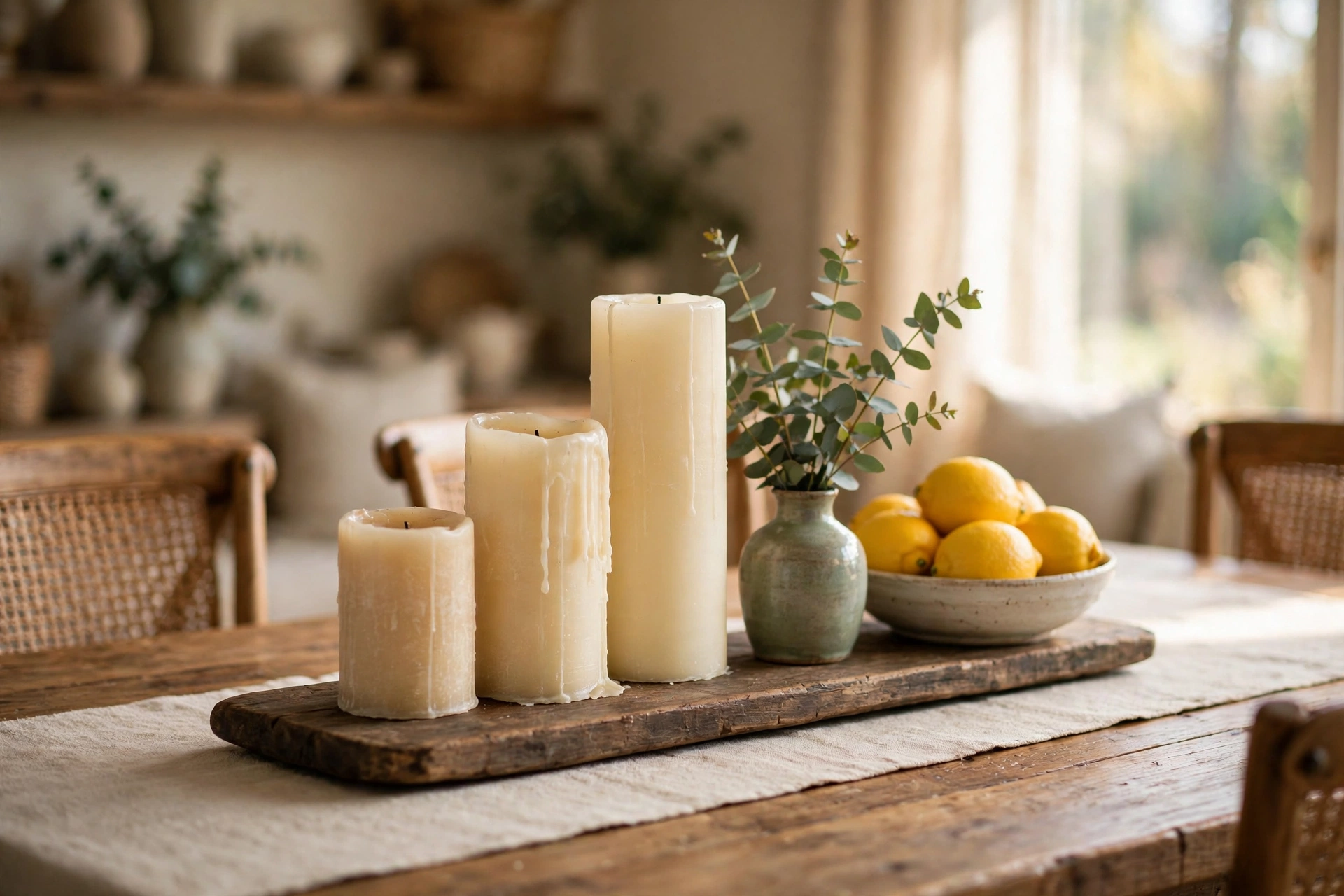
I used to leave my dining table completely bare between meals. It looked clean, I told myself, but it never looked inviting — and somehow, we always ended up eating in front of the television instead. Then I put a simple bowl of lemons in the middle of the table, just because I had nowhere else to put them, and something changed. The table suddenly looked like a place to sit down. A centrepiece does not have to be fancy or expensive. It just has to give the table a heart.
Here are five centrepiece ideas that work for everyday meals as well as special dinners, without making the table hard to use.
1. A Low Bowl of Fruit or Flowers
A wide, shallow bowl filled with lemons, oranges or seasonal fruit is the easiest centrepiece of all. It adds colour, it smells lovely, and nothing is wasted because the fruit gets eaten. In spring, swap the fruit for a few short stems in a low bowl of water. Keep everything low so people can see each other across the table — that is the whole point of sitting together.
2. A Wooden Board with Candles
A long wooden board down the centre of the table instantly makes dinner feel intentional. Add three pillar candles of different heights, a few sprigs of greenery, and nothing else. The board keeps wax off the table, and you can lift the whole thing away in one move when you need space for serving dishes. Use unscented candles if you are serving food, so the smell does not compete with dinner.
3. One Tall Vase, Not a Crowd of Small Ones
One generous vase with five or seven stems looks far more expensive than a row of tiny jars. Choose one type of flower or branch — eucalyptus, dried pampas, or whatever is in season — and let it be the star. A tall, slim vase works best on a long table because it takes up little room, and on a round table it draws the eye upward without blocking anyone’s view.
4. A Seasonal Tray You Can Change in Minutes
A round tray is a centrepiece with a secret: it is really a container. Put a small plant, a candle and a couple of decorative stones on it, and when the season changes, swap one or two pieces instead of starting over. Pinecones in winter, shells in summer, coloured leaves in autumn — the tray stays, the mood changes. It also makes clearing up after dinner wonderfully quick.
5. Everyday Objects, Styled on Purpose
Some of the best centrepieces are things you already own. A stack of beautiful cookbooks, a ceramic jug, a pretty teapot, or a handwoven runner with a single vase on top can all work. The trick is grouping: three items of different heights, placed close together, look deliberate, while the same three things scattered across the table just look like clutter. Odd numbers almost always look better than even ones.
Mistake to avoid
The most common centrepiece mistake is building something so tall or wide that guests cannot see or pass things across the table. If you have to move the centrepiece to serve dinner, it is too big. A good test: sit down and look across the table. If you can see the person opposite you and reach the salt without standing up, your centrepiece is the right size.
A dining table does not need a special occasion to deserve a centrepiece. Start with one low bowl or one vase, keep it simple, and change it when the mood takes you. The table will do the rest — it will quietly invite everyone to sit down, stay a little longer, and enjoy the meal together.
Leave a Reply