
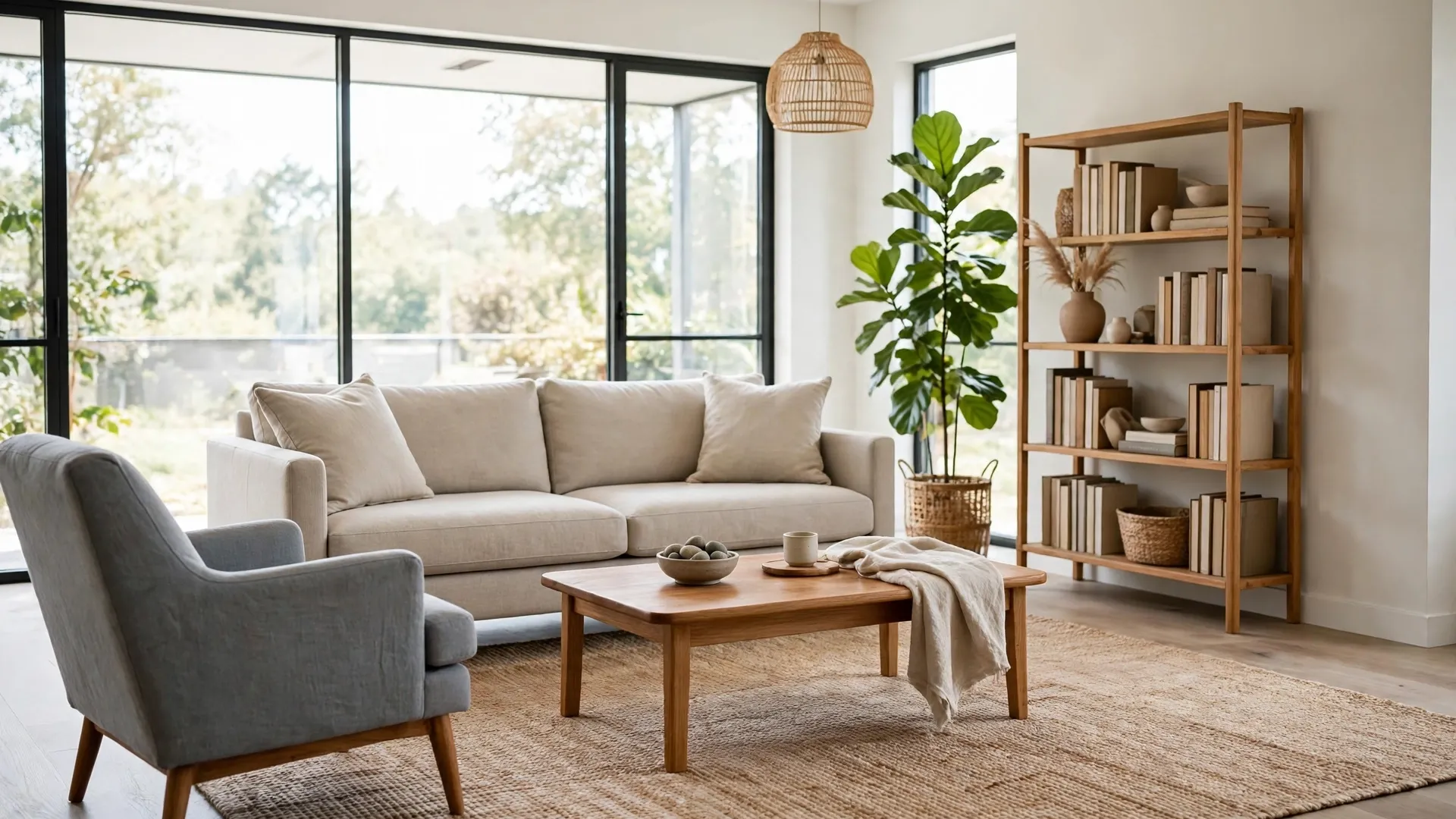
For years my living room felt wrong and I could not say why. The furniture was fine, the colours were pleasant, and yet the room always felt cramped and slightly restless. Then a friend moved one chair, pulled the sofa a few inches forward, and suddenly the whole room breathed differently. That was the day I learned that layout matters more than any single piece of furniture. How you arrange a room decides how it feels to walk into, sit in, and live in every day.
Here are five living room layout ideas that changed my room, and that work in small flats and larger family homes alike.
1. Let the Room Have One Clear Focal Point
Every calm living room has one place the eye lands first, whether that is a window, a fireplace, a television, or a piece of art. Arrange your sofa and chairs so they face that point instead of drifting in different directions, and the room instantly feels purposeful. If your room has no obvious focal point, create one: hang a large picture, place a tall plant beside a window, or centre a low bookshelf on the longest wall. Once the focus is clear, everything else finds its place around it.
2. Pull Furniture Away From the Walls
Pushing every piece flat against the wall is the most common layout habit, and it often makes a room feel like a waiting area. Try pulling the sofa forward even a few inches, and let a narrow console or a plant sit behind it. Angle one armchair slightly toward the sofa instead of lining it up beside the wall, and the seating area becomes a conversation space rather than a border around an empty middle. The room will feel more intentional, and often larger, because the centre finally has a job.
3. Leave Clear Paths Through the Room
A room feels cramped not when it is full, but when you have to shuffle around furniture to cross it. Before you settle a layout, walk the routes you actually use: from the door to the sofa, from the sofa to the kitchen, from the window to the shelves. Keep those paths at least wide enough to walk comfortably without turning sideways, and avoid placing a coffee table or a footstool directly in the main route. When movement feels easy, the whole room feels calmer, even if nothing else has changed.
4. Anchor Each Zone With a Rug
In an open living room, a rug is what turns a group of furniture into a place. Choose a rug large enough that the front legs of the sofa and chairs rest on it, rather than a small rug floating in the middle of the floor. That single change makes the seating area feel grounded and generous. If your room also holds a reading corner or a work spot, a second, smaller rug or a different floor texture can quietly mark that zone without needing a wall or a screen.
5. Balance Heavy Pieces Across the Room
A room feels lopsided when all the heavy furniture crowds onto one side: a big sofa, a tall bookcase and a television unit all competing on the same wall. Spread the visual weight around instead. If the sofa sits on one side, balance it with a tall plant or a bookshelf on the opposite side, and keep the lighter pieces, like a small side table or an open chair, near the heavier ones. When the weight is shared, the eye moves comfortably around the room instead of getting stuck in one corner.
Mistake to Avoid
The biggest layout mistake I made was arranging the room for how it looked from the doorway instead of how it felt to sit in. I placed chairs symmetrically, centred everything perfectly, and then never actually used the prettiest corner because the light was poor and the seat faced away from everyone. Arrange for real life first: where you read, where guests sit, where the evening light falls. A layout that serves the people in it will always look better than one that only photographs well.
A good living room layout does not need new furniture or a renovation. It needs a clear focus, a little breathing space around each piece, paths you can actually walk, and zones that feel settled rather than scattered. Try moving just one piece this weekend, perhaps the sofa or a single chair, and live with the change for a few days. You may be surprised how much bigger, calmer and easier your room feels when the layout finally works with you instead of against you.
Leave a Reply