
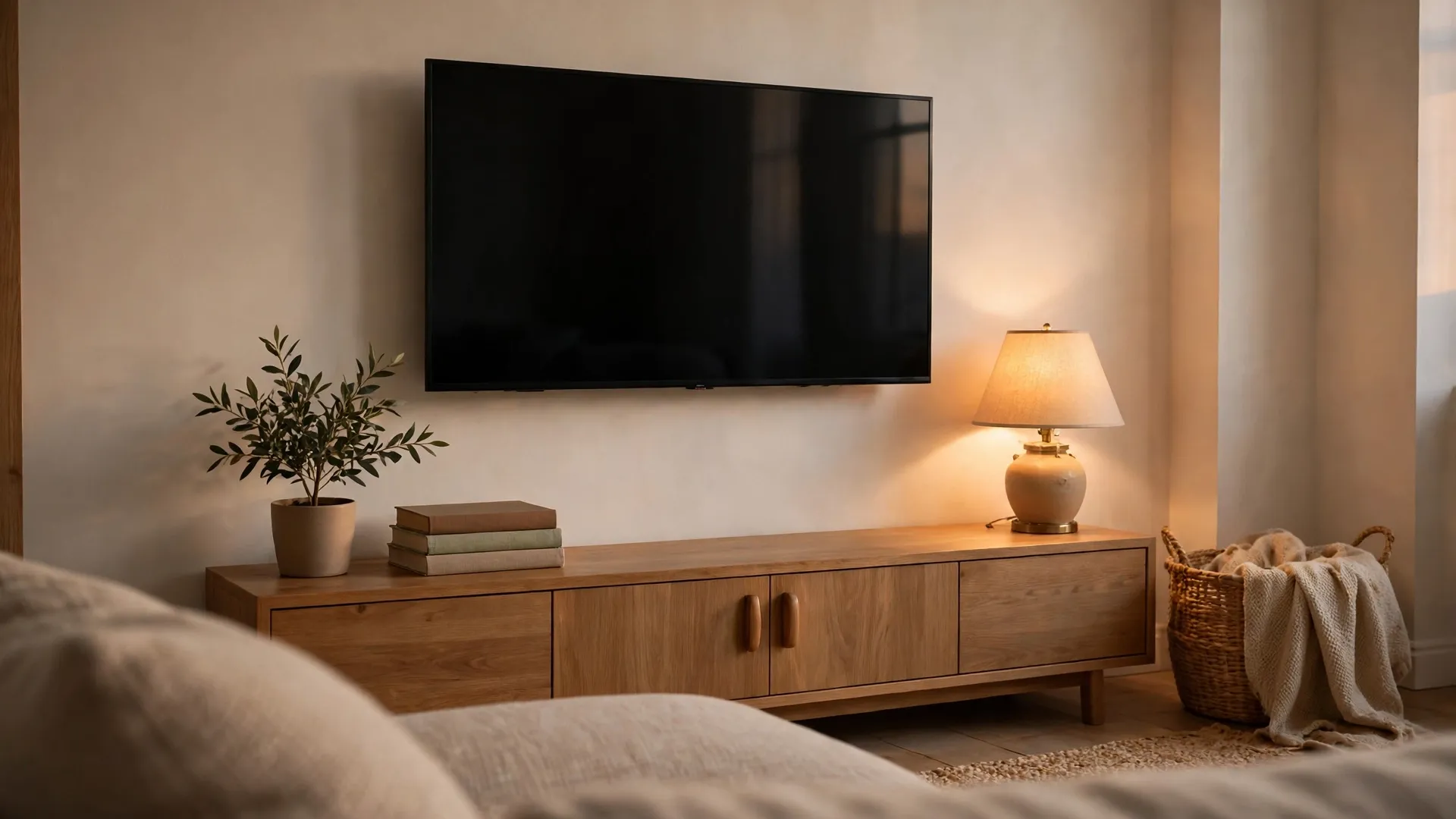
For years, the television was the awkward guest in my living room. It hung on a bare wall, its black screen staring back at me, with a tangle of cables underneath and nothing around it to soften the look. The room felt finished everywhere except that one wall. When I finally gave the TV wall some attention, the whole room changed. It looked calmer, more intentional, and watching a film in the evening felt like a proper occasion rather than just staring at a screen.
Here are five ideas that made the biggest difference, and none of them needs a full renovation.
1. Build the Wall Around the Screen, Not Just Under It
A television looks lost when it floats alone on a large blank wall. Instead, treat the wall as one composition. A low console underneath grounds the screen, a shelf or a piece of art on either side gives it company, and the screen becomes part of the room instead of a hole in it. I kept the console slightly wider than the television, which instantly made the whole arrangement look balanced. The trick is proportion: the furniture and the screen should feel like they belong together, not like strangers sharing a wall.
2. Hide the Cables Before You Add Anything Pretty
No amount of styling can rescue a wall with cables dangling down it. Before I bought a single decorative piece, I ran the cables through a paintable trunking channel that blends into the wall, and tucked the power strip inside the console. It took less than an hour and changed everything. If trunking is not an option, a tall plant or a basket beside the console can disguise the worst of it, but a clean cable run is always worth doing first. A tidy wall makes even a modest television look expensive.
3. Add Warmth With Wood, Texture and Soft Light
A screen is hard, flat and dark, so the wall around it needs softness to balance it. I added a wooden console, a woven basket for throws, and a small lamp on one side that I switch on in the evening. The warm light stops the television from dominating the room after dark and makes the corner feel inviting even when the screen is off. A textured wall panel, a rattan tray or a linen cushion nearby does the same job. Think of it as dressing the wall in layers, the same way you would dress a bed.
4. Keep the Screen at Eye Level and the Seating Honest
This is the practical idea nobody photographs, but it matters most for comfort. The centre of the screen should sit roughly at eye level when you are seated, not high up near the ceiling like a pub television. I lowered my mount by a few inches and my neck thanked me within a week. Then I checked the seating distance: too close and the picture feels overwhelming, too far and you lose detail. A simple rule is to sit about one and a half to two times the diagonal size of the screen away. Comfort first, and the styling will look better because the room actually works.
5. Style the Console Lightly and Leave Breathing Room
It is tempting to fill every inch of the console with ornaments, but a crowded console competes with the screen. I chose three things: a low stack of books, a small plant, and one ceramic vase. Everything else went into a drawer. The empty space around them is what makes the arrangement look calm. When the television is on, your eye goes to the picture; when it is off, your eye rests on a simple, tidy display. Rotate one piece with the seasons if you like a change, but resist adding more. Less really does look like more on a TV wall.
Mistake to Avoid
The mistake I made first was mounting the television too high and then trying to fix it with decoration. I added shelves, art and plants around a screen that was still uncomfortably high, and nothing helped because the basic placement was wrong. Always settle the height and the seating distance before you style anything. A well-placed screen on a plain wall beats a badly placed screen surrounded by beautiful objects every single time.
A television wall does not need to be a design project. Hide the cables, ground the screen with furniture that fits, add a little warmth and light, set the height right, and leave some breathing room. Do those five things and the wall that used to bother you becomes the calmest corner of the room, whether the television is on or off.
Leave a Reply