
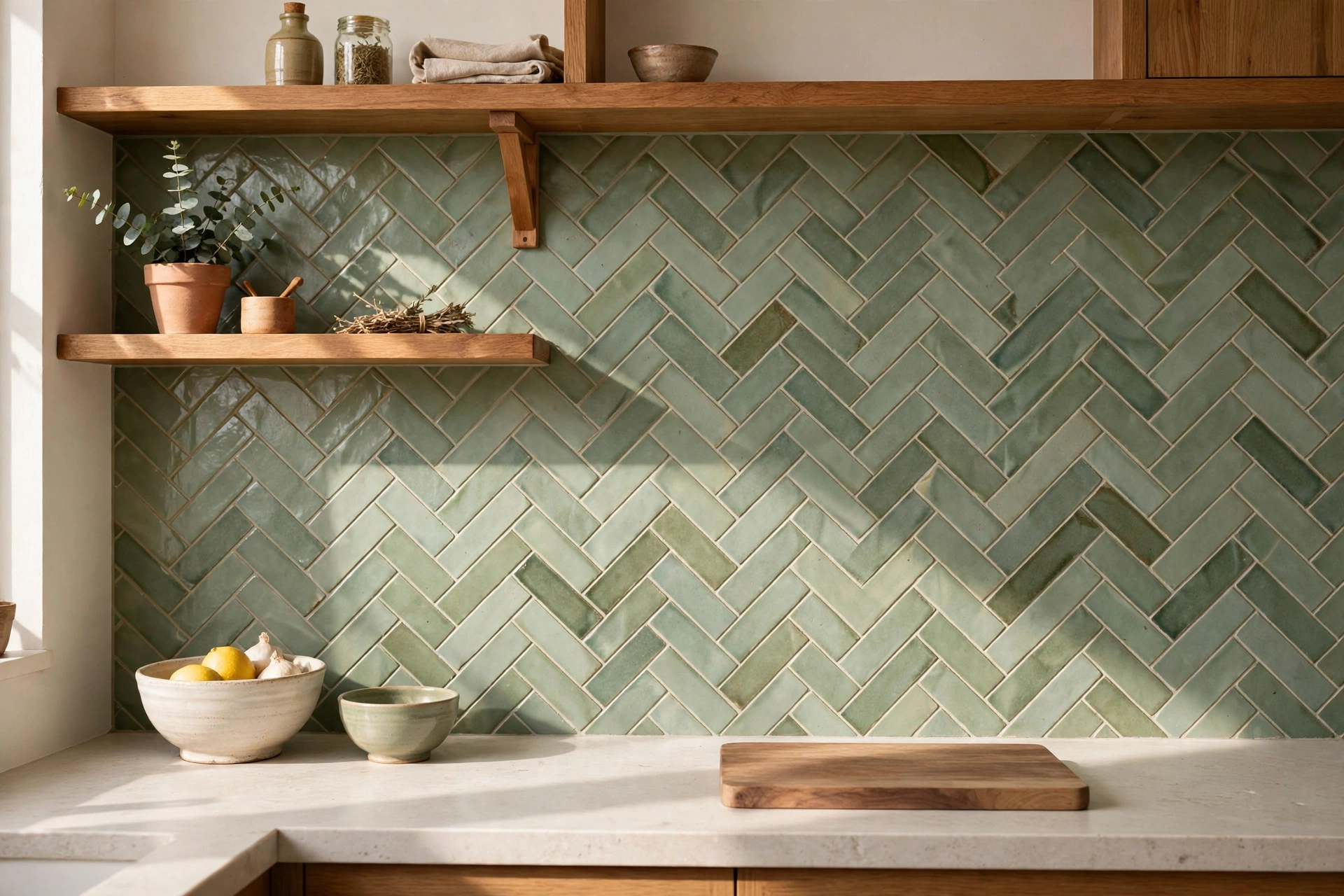
I used to think of a backsplash as the practical strip of tiles behind the stove, something you wiped clean and forgot about. Then I changed mine, and the whole kitchen changed with it. Suddenly the room had a focal point, the cabinets looked more expensive, and cooking felt less like a chore and more like something I actually wanted to do. A backsplash is a small surface, but it sits right at eye level, exactly where you look while you cook, wash up, and chat over coffee. That makes it one of the best places in the whole house to add character without a full renovation.
Here are five ideas that will help you choose a backsplash you will still love years from now.
1. Let One Tile Do the Talking
If the rest of your kitchen is calm, let the backsplash be the star. A handmade-look tile, a soft herringbone pattern, or a tile in a muted green or deep blue gives the room a personality without shouting. Keep the grout colour close to the tile so the pattern reads as texture rather than a grid. This is the idea to pick if your cabinets and counters are plain and you want one clear moment of interest.
2. Run the Backsplash All the Way Up
Stopping tiles at the bottom of the wall cabinets can make a kitchen feel cut in half. Running the same tile up to the ceiling, or at least to the underside of open shelving, makes the wall feel taller and the kitchen feel more considered. It works especially well behind a cooker, where a full-height panel turns a working wall into a feature. If budget is tight, do the full height on one wall only and keep the rest simple.
3. Match the Mood, Not Just the Colour
A backsplash should feel like it belongs with the rest of the kitchen, not just match one paint swatch. A warm, rustic kitchen suits terracotta or cream tiles with a soft, uneven finish. A sleek modern kitchen suits large-format tiles with minimal grout lines. A classic kitchen suits simple subway tiles laid in a slightly unexpected pattern. When you are choosing, hold the sample against your cabinets in daylight, not just under shop lights.
4. Use Texture When Colour Feels Risky
If bold colour feels like too much commitment, texture is your friend. Fluted tiles, softly glazed tiles that catch the light differently across the wall, or natural stone with gentle variation all add interest in neutral tones. Texture is forgiving too: it hides splashes and marks better than a perfectly flat, glossy surface, which matters on a wall that works as hard as this one does. Pairing a textured backsplash with a calm counter is a reliable combination, and it sits beautifully alongside thoughtful Kitchen Counter Styling Ideas.
5. Treat the Backsplash as Part of the Whole Kitchen
The best backsplashes are chosen with the rest of the kitchen in mind, not in isolation. Think about how it will look next to your island, your open shelves, and the items you keep out every day. A busy tile needs quiet neighbours, while a quiet tile can handle a busier counter. When the whole room is planned together, even a modest kitchen feels intentional. That joined-up thinking is what makes Kitchen Island Styling Ideas work so well too: every surface supports the next, instead of competing with it.
Mistake to avoid
The mistake I see most often is choosing a backsplash from a tiny sample viewed flat on a table. Tiles look completely different once they are vertical, grouted, and seen in your own light, next to your own cabinets. Always take a few full tiles home, prop them upright where they will live, and live with them for a day or two before you commit. A sample board is a starting point, not a decision.
A backsplash is a small project with an outsized payoff. Choose one that suits the mood of your kitchen, run it with confidence, and let it do the quiet work of making the whole room feel finished. And if you are planning the rest of the kitchen around it, Pantry Organization Ideas will help you keep the spaces behind the doors as calm as the wall in front of them. Start with one wall, get it right, and enjoy a kitchen that finally feels complete.
Leave a Reply