
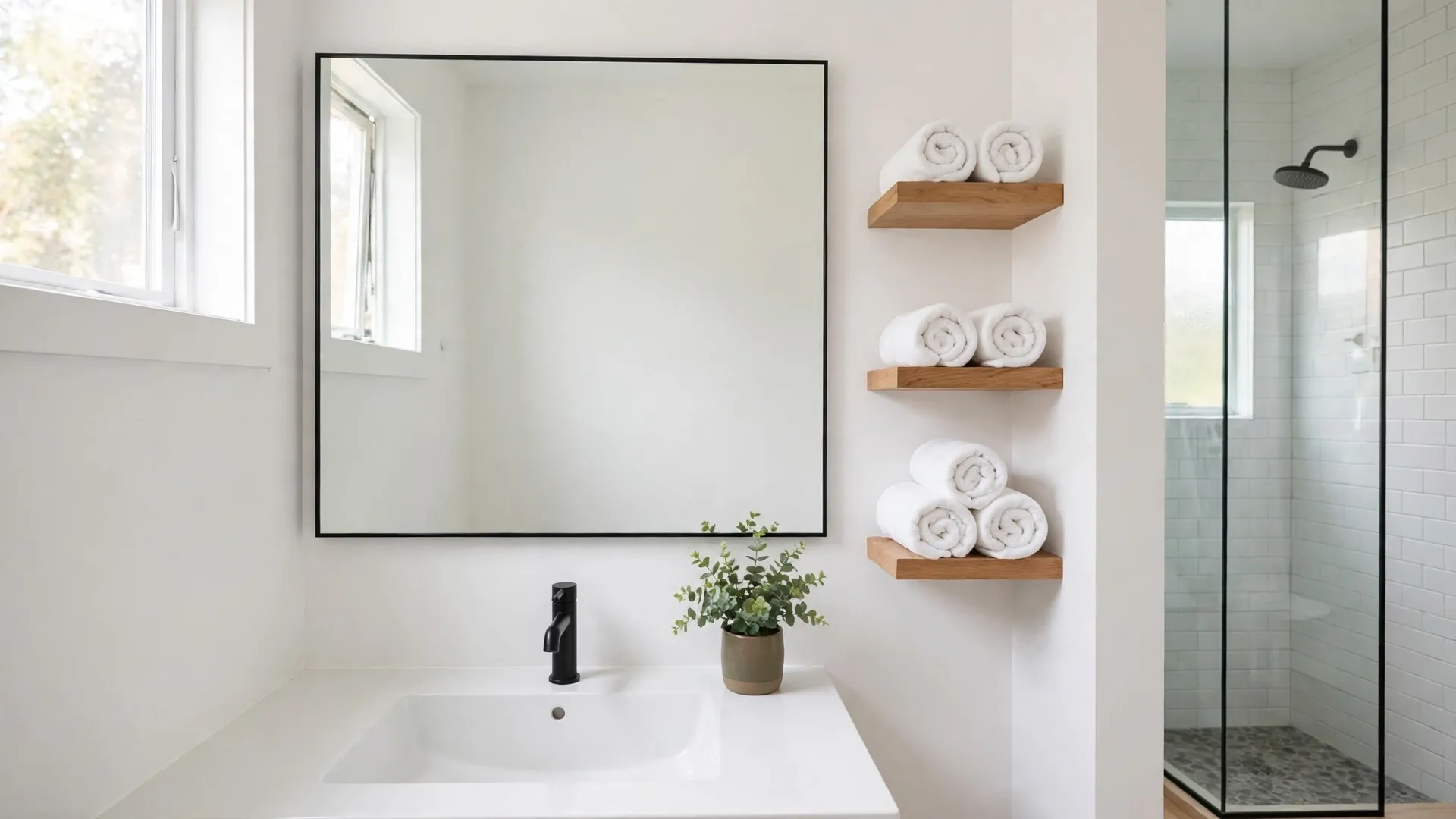
I used to think a small bathroom was something to put up with. Mine was the kind of room where the door nearly hit the sink, the towels never quite dried, and every morning felt a little cramped. Then I stopped trying to fit a big bathroom into a small room and started working with what the room actually offered. The change was surprising. With a few thoughtful choices, the same tiny space started to feel bright, calm and genuinely easy to use. Here are five ideas that made the biggest difference.
1. Let the Light Do the Heavy Lifting
A small bathroom feels smaller in the dark, so light is the first thing to fix. I keep the window dressing as simple as possible, just a light blind that lets daylight in while keeping privacy. A bright white ceiling and pale walls bounce that light around the room instead of soaking it up. In the evening, I layer the lighting: a soft ceiling light for general brightness and a warm light beside the mirror for getting ready. The room feels twice as open, and nothing about it cost a fortune.
2. Choose One Big Mirror Instead of Many Small Ones
It is tempting to fill a small wall with little mirrors and shelves, but one generous mirror over the sink does far more. It reflects light across the room, doubles the sense of space, and gives the wall a clean, finished look. I picked a simple frameless shape that runs almost the full width of the sink, and suddenly the room had a focal point instead of a cluttered wall. A mirror with a slim shelf underneath is even better, because it holds the few things you reach for every day without adding another unit to the wall.
3. Pick Storage That Floats
Bulky cupboards eat floor space, and in a tiny bathroom floor space is precious. Floating shelves and a wall-hung vanity keep the floor visible, which tricks the eye into thinking the room is bigger. I use two slim shelves above the toilet for rolled towels and a small basket, and a narrow wall cabinet for medicines and cleaning bits. Everything has a home, nothing sits on the floor, and cleaning underneath takes seconds. The trick is to keep the shelves tidy: if a shelf starts to overflow, something on it needs to go.
4. Stick to One Calm Colour, Layered with Texture
A small room does not need to be all white, but it does need restraint. I chose one calm base colour, a soft warm white, and layered texture on top of it: a woven basket, a waffle-weave towel, a wooden bath mat and a small green plant. The textures stop the room feeling flat, while the single colour keeps it peaceful. When every surface shouts a different colour or pattern, a tiny bathroom feels busy and chaotic. When the palette stays quiet, the room feels like a little retreat.
5. Keep the Shower Area Open
A heavy shower curtain or a dark screen can cut a small bathroom in half. Swapping to a clear glass panel, or even just a light, plain curtain pulled fully back when not in use, keeps the whole room visible at once. I also switched to a single slim rail and matching bottles instead of a jumble of half-empty containers. The shower corner now blends into the rest of the room, and the bathroom feels like one space rather than two cramped ones.
Mistake to Avoid
The biggest mistake I made was trying to use every idea at once. Patterned tiles, a bold rug, bright accessories, three kinds of storage and a feature wall all competed with each other, and the room ended up feeling smaller and messier than before. In a small bathroom, less really is more. Pick one or two changes, live with them for a week, and only then decide what else the room truly needs.
A small bathroom will never be a palace, and it does not need to be. With good light, one strong mirror, floating storage, a calm palette and an open shower area, it can be the easiest room in the house to use and one of the nicest to walk into. Start with whichever idea feels simplest, and let the room surprise you.
Leave a Reply