When I first helped set up a child’s room, I made the classic mistake of buying everything cute I saw, all at once. The room looked lovely for a week, then it turned into a cheerful mess that nobody wanted to tidy. What I learned is simple: a good kids room is not about having more things. It is about giving everything a home, keeping the colours calm enough to sleep in, and leaving space for play, reading and growing.
Here are five ideas that actually work, without a big budget or a full makeover.
1. Start With a Calm Base and Add Colour in Small Doses
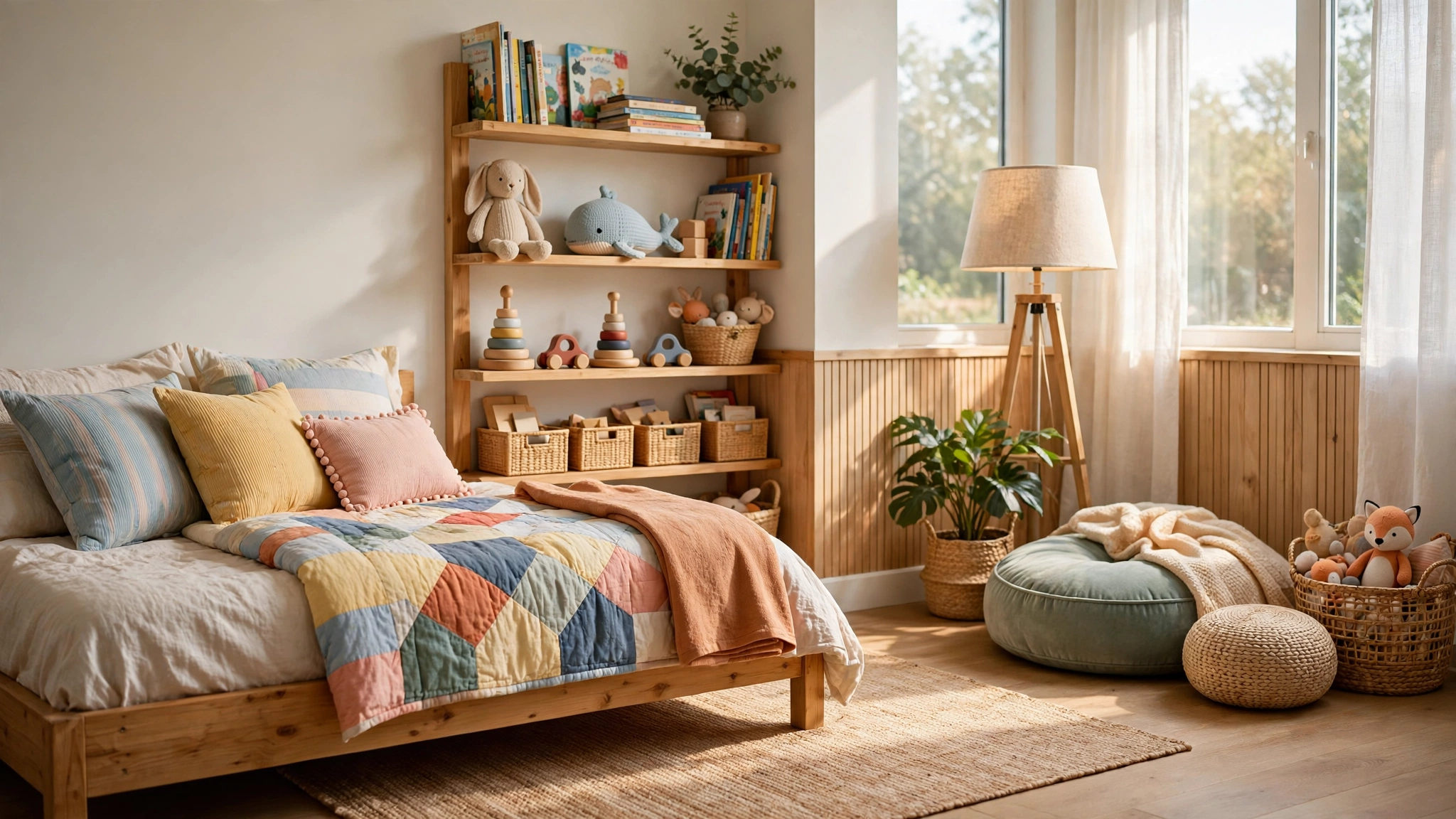
Paint the walls a soft, light colour — warm white, pale sage or gentle sky blue — and bring the fun in through bedding, cushions, curtains and wall prints. This way the room feels bright and happy in the daytime and peaceful at bedtime. When your child outgrows a favourite colour, you only need to swap a few soft items, not repaint the whole room.
2. Give Every Toy and Book a Low, Labelled Home
Children tidy up far more happily when they can reach everything themselves. Use low open shelves, baskets and small boxes at your child’s height, and label them with pictures as well as words for younger children. One basket for building blocks, one for soft toys, one for art supplies — that is enough to start. Rotate toys every few weeks instead of keeping everything out at once; old favourites feel new again, and the room stays manageable.
3. Create a Cosy Reading Corner, Even in a Small Room
You do not need a big nook. A floor cushion, a small bookshelf or a wall-mounted shelf, and a warm lamp beside a window or a quiet corner will do. Keep a small stack of books facing forward so the covers catch your child’s eye. A reading corner gives the room a calm purpose beyond play, and it becomes the spot children return to when they want quiet time.
4. Choose Furniture That Grows With Your Child
Look for pieces that can change as your child grows: a bed that extends or suits older children, a desk at the right height for homework later, and storage that works for toys now and school books later. Sturdy, simple furniture in light wood or white lasts longer than themed furniture that a child outgrows in a year, and it keeps the room looking tidy rather than busy.
5. Let Your Child Choose a Few Personal Touches
A kids room should feel like theirs, not like a showroom. Let your child pick a few things — a favourite poster, the colour of one cushion, or what goes on a small display shelf. When children help choose, they take more pride in the room and are more likely to look after it. Keep the rest of the room simple so their chosen pieces stand out instead of competing with each other.
Mistake to Avoid
The biggest mistake is filling every wall and shelf at once. A room packed with posters, toys and bright colours looks exciting in a photo, but it feels restless to live in, and tidying becomes a daily battle. Leave some empty wall space and one empty shelf on purpose. Empty space is what makes a room feel calm, and it gives your child room to add their own drawings and treasures over time.
A kids room does not need to be perfect. It needs to be a place where a child can play freely, sleep peacefully and find their things without a search party. Start with a calm base, add low storage, carve out a reading corner, pick furniture that lasts, and let your child make it their own. Small, thoughtful changes — made one at a time — will turn even a small room into a space your child truly loves.
Leave a Reply