I used to think a rug was just something to keep my feet warm. Then I moved into a flat where the sofa floated in the middle of a bare floor, and the whole room felt unfinished, no matter what else I added. The day I finally laid down a proper rug, everything clicked into place. A rug does more than cover the floor. It anchors the furniture, softens the sound, adds colour and texture, and tells your eye where one zone ends and another begins. Get it right and a room instantly feels warmer and more intentional.
Here are five rug styling ideas that will help any room feel grounded and complete.
1. Size the Rug to the Room, Not the Furniture
The most common rug mistake is buying one that is too small. A rug that only sits under the coffee table makes the furniture look like it is floating on an island. As a rule, the front legs of your sofa and chairs should sit on the rug, and in a bedroom the rug should extend well beyond the sides of the bed. When in doubt, go one size up. A generous rug makes a small room feel bigger, while a tiny rug makes even a large room feel cramped.
2. Layer Rugs for Depth and Texture
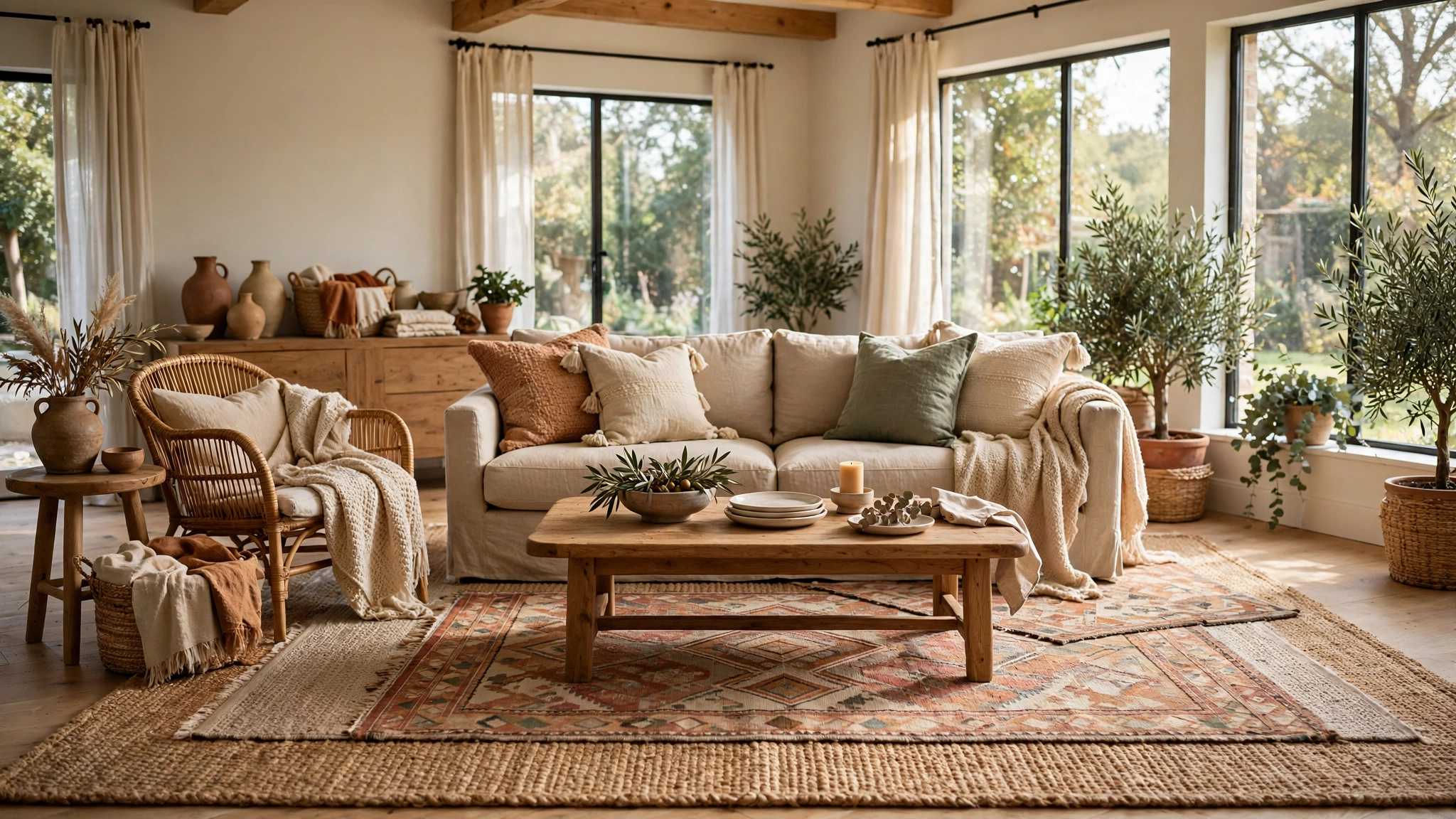
Layering is the easiest way to add richness without buying new furniture. Start with a large, neutral base rug in jute, sisal or a flat weave, then place a smaller patterned or plush rug on top, slightly off-centre. The contrast of textures makes the floor interesting, and it is a forgiving trick for rented homes where you cannot change the flooring. Keep the colours in the same family so the layers look deliberate rather than accidental.
3. Let the Rug Set the Colour Story
If you are stuck on a colour scheme, start from the rug up. Pick a rug with two or three colours you love, then pull cushions, throws and artwork from those same shades. The rug becomes the quiet anchor of the room, and everything else feels connected to it. A patterned rug works beautifully in a neutral room, while a solid rug in a warm tone can calm a room that already has a lot of pattern elsewhere.
4. Define Zones in Open Spaces
In an open-plan home, rugs are your invisible walls. A rug under the dining table marks the eating area, another under the sofa marks the sitting area, and a runner in the hallway guides the eye from one space to the next. Use different rugs for different zones, but keep a common thread — a shared colour or a similar texture — so the whole home still feels like one place rather than several rooms pushed together.
5. Play With Shape and Placement
Rectangular rugs are the safe choice, but they are not the only one. A round rug softens a square room and works beautifully under a round dining table or in a reading corner. A runner can make a narrow hallway feel longer and more welcoming, and a rug placed at an angle in a small room can break up boxy lines and add a little personality. Do not be afraid to experiment — moving a rug costs nothing, and sometimes a fresh angle is all a tired room needs.
Mistake to Avoid
The biggest mistake is treating the rug as an afterthought. Buying the rug last, in whatever size is left in stock, almost always ends in a rug that is too small, too busy or the wrong colour for the room. Choose the rug early, measure your floor and furniture first, and let the rug guide the rest of the room. A little measuring before you buy saves years of a room that never quite feels right.
A good rug is one of the simplest upgrades a home can get. It warms the floor, quiets the room, pulls the furniture together and gives the whole space a finished feeling. Start with the right size, layer a little texture, and let the rug do the quiet work of making your home feel grounded. Your feet — and your rooms — will thank you.
Leave a Reply